NYC Home Insulation Costs: A Complete 2026 Price Breakdown
Your heating bill shouldn’t feel like a second rent payment, but for many New York City homeowners, that’s exactly what happens each winter. The culprit is often inadequate insulation in buildings constructed decades before anyone worried about energy efficiency.
Insulation upgrades reduce heating and cooling costs by 15-25% on average, translating to hundreds of dollars in annual savings for NYC households. But getting there requires understanding what you’ll actually pay and what drives those costs in this unique market.
From $1,800 for basic attic coverage to $18,000 for comprehensive whole-home solutions, prices vary dramatically. This breakdown helps you understand what to expect and where your money goes.
Why NYC Insulation Projects Cost What They Do
Three factors drive New York City’s insulation costs above national averages. First, the housing stock itself presents challenges. Buildings from the early 1900s, pre-war apartments, and brownstones with century-old construction weren’t designed for thermal efficiency.
Second, logistics complicate every project. Manhattan high-rises, Brooklyn walk-ups, and Queens attached homes all present access issues that suburban contractors never encounter. Moving materials through narrow stairwells, working around elevator schedules, and dealing with limited staging areas all consume time and labor.
Third, regulatory requirements add steps and costs. Building permits, inspections, and compliance with NYC building codes create administrative layers that suburban projects don’t face.
2026 Insulation Material Costs in NYC
Understanding material options and their costs helps you make informed choices:
Spray Foam Insulation costs $3 to $7 per square foot installed. A 1,000 square foot attic project runs $3,000 to $7,000. This premium option provides the highest R-value per inch and simultaneously air seals. The cost reflects specialized equipment, certified installers, and material expense. It excels in NYC’s older buildings with significant air leakage issues.
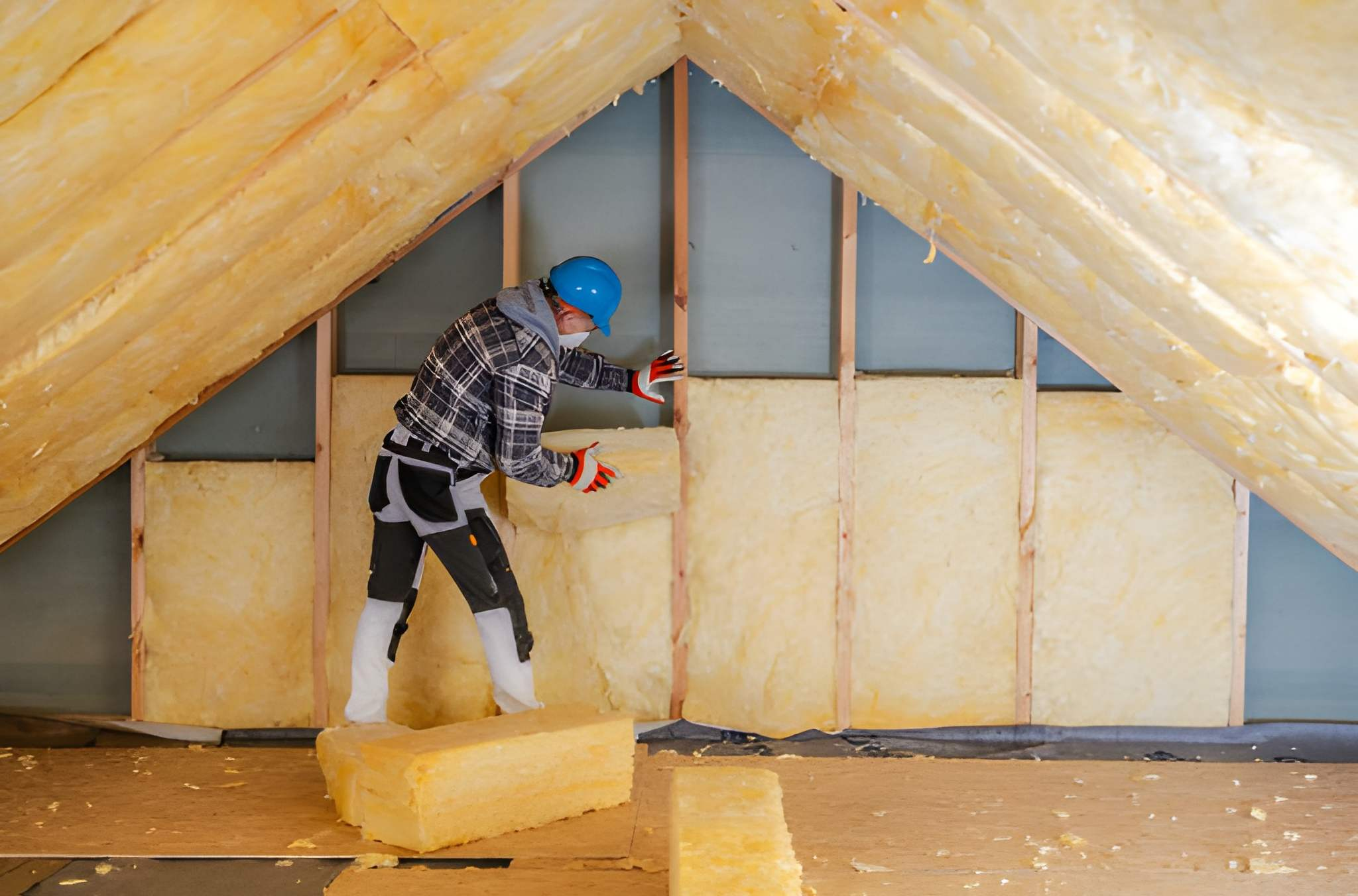
Blown-In Cellulose or Fiberglass ranges from $1.50 to $3.50 per square foot. The same 1,000 square foot attic costs $1,500 to $3,500. These materials install quickly, conform to irregular spaces, and often contain recycled content. They’re effective for attics and accessible wall cavities.
Batt Insulation in fiberglass or mineral wool runs $0.65 to $2.50 per square foot installed, or $650 to $2,500 for 1,000 square feet. It’s the budget option, but installation quality critically affects performance. Compressed or gapped batts lose much of their effectiveness.
Rigid Foam Board costs $2.50 to $5 per square foot. It’s the preferred choice for basement walls and exterior applications requiring moisture resistance. Average basement projects run $2,500 to $5,000.
Reduce Energy Bills by 15-25% with Expert NYC Insulation
Your heating bill shouldn't feel like a second rent payment. Our experienced NYC insulation team navigates the unique challenges of city buildings—from brownstones to high-rises. As a NYSERDA-approved contractor, we help you access rebates that can cut costs in half or cover entire projects for eligible homeowners. Schedule your free energy assessment to discover your exact savings potential with a 6-12 year payback period.
Typical NYC Insulation Project Costs
Real-world projects break down like this:
Attic Insulation in standard brownstones or single-family homes with 800-1,200 square feet of attic space costs $2,000 to $8,000. Price factors include access difficulty, existing insulation removal needs, and material selection. Removing old, contaminated insulation adds $1,500 to $3,000 to the base project cost.
Basement or Crawl Space Insulation for typical NYC basements covering 600-1,000 square feet of wall area runs $2,500 to $6,500. Many basements require moisture remediation before insulation installation, potentially adding $1,000 to $5,000 depending on severity.
Wall Cavity Insulation represents the largest expense category. Dense-pack cellulose blown through drilled holes costs $3 to $6 per square foot. A 1,500 square foot home might need $7,500 to $15,000 for comprehensive wall insulation. Projects requiring interior or exterior surface removal cost significantly more.
Rim Joist Insulation using spray foam costs $500 to $1,500. This often-overlooked area where foundation meets floor framing can account for substantial heat loss in older homes.
Additional Costs That Add Up
Beyond basic material and installation labor, several factors increase total project costs:
Asbestos and Lead Remediation frequently surfaces in pre-1980s buildings. Professional abatement is mandatory before insulation work begins. Attic asbestos removal starts around $1,500 to $3,000 for small areas, with costs scaling up for extensive contamination.
Building Access Challenges directly increase labor costs. No elevator, narrow stairs, limited parking, and restricted work hours all extend project duration. Buildings requiring specific contractor credentials or union labor see higher bids.
Co-op and Condo Regulations may limit contractor selection or mandate specific insurance levels and working conditions. Some buildings maintain approved contractor lists or require board review before work begins.
Permit and Inspection Fees for work affecting building envelopes typically range from $200 to $800. Some buildings impose additional requirements for alteration agreements or architectural review.
Professional Air Sealing costs $500 to $2,000 but dramatically improves insulation performance. Without proper air sealing, you’re essentially insulating a leaky vessel. This step often delivers as much benefit as the insulation material itself.
Return on Investment: The Financial Case for Insulation
Insulation shifts from expense to investment when you examine long-term returns. NYC’s high energy costs accelerate payback compared to national averages.
Research from the Department of Energy indicates typical savings of 15-25% on heating and cooling costs after comprehensive insulation upgrades. For NYC households spending $2,000 to $3,500 annually on climate control, that means $300 to $875 in annual savings continuing for decades.
A $5,000 attic insulation project typically pays for itself in 6-9 years through reduced utility bills. Beyond direct savings, benefits include improved comfort, reduced HVAC wear and tear, and increased property value.
Property value studies show insulation improvements can increase home values by 2-6%. On a $900,000 NYC property, that potentially adds $18,000 to $54,000 in value.
Leveraging NYSERDA Rebates for Affordability
New York State Energy Research and Development Authority offers substantial financial assistance for insulation projects, dramatically improving affordability.
EmPower+ specifically serves low-to-moderate income households with rebates covering up to 100% of insulation costs. Even households not qualifying for EmPower+ can access significant rebates through other NYSERDA rebate programs, sometimes reducing out-of-pocket costs by thousands of dollars.
Accessing these programs requires working with participating contractors and completing home energy assessments. The assessment process identifies your home’s specific needs and ensures improvements target areas delivering maximum impact.
Program details and eligibility requirements change periodically, so verify current offerings before starting projects. Many contractors experienced with NYSERDA programs handle application paperwork as part of their service.
Selecting Appropriate Insulation for Different Spaces
Different areas of your home benefit from different insulation approaches:
Accessible Attics typically work best with blown-in cellulose or fiberglass. These materials conform to irregular framing, achieve consistent coverage, and install efficiently. NYC climate zone 4A requires R-49 to R-60 for optimal attic performance.
Restricted-Access Attics with limited entry or complex framing often justify spray foam’s higher cost. The combined insulation and air sealing in one application provides particular value when working through small access hatches typical in brownstone construction.
Basement Walls demand moisture-resistant materials given NYC’s humid conditions. Closed-cell spray foam or rigid foam board resist moisture damage that compromises fiberglass. This is especially important in finished basements used as living space.
Existing Wall Cavities typically receive dense-pack cellulose blown through small drilled holes, avoiding the expense and disruption of removing drywall or siding. This approach works well with the balloon-frame construction common in older NYC buildings.
Reduce Energy Bills by 15-25% with Expert NYC Insulation
Your heating bill shouldn't feel like a second rent payment. Our experienced NYC insulation team navigates the unique challenges of city buildings—from brownstones to high-rises. As a NYSERDA-approved contractor, we help you access rebates that can cut costs in half or cover entire projects for eligible homeowners. Schedule your free energy assessment to discover your exact savings potential with a 6-12 year payback period.
Contractor Selection: Red Flags to Avoid
Quality varies significantly among insulation contractors. Watch for these warning signs:
Unusually Low Estimates that significantly undercut other bids often mean cut corners, inferior materials, or inadequate preparation. Quality insulation demands thorough air sealing, appropriate vapor barriers, and meticulous installation.
Reluctance About Energy Audits should concern you. Reputable contractors recommend professional energy assessments before major insulation investments to identify actual needs and prioritize improvements effectively.
Insurance and Licensing Issues create liability exposure. Verify current general liability insurance, workers’ compensation coverage, and appropriate licensing. Request and verify certificates.
Incomplete Contracts lead to disputes. Comprehensive written agreements should detail R-values to be achieved, square footage covered, specific materials, project timeline, payment schedule, and warranty terms.
Limited Solution Offerings suggest the contractor prioritizes their convenience over your needs. A contractor who only offers one insulation type isn’t thinking about what’s truly best for your specific situation.
Understanding R-Value Requirements
R-value measures thermal resistance—higher numbers indicate better insulation. NYC homes need:
Attics at R-49 to R-60 for optimal performance. Most older homes have R-11 to R-19, losing tremendous heat. Upgrading to current standards can reduce attic heat loss by 60-70%.
Walls at R-13 to R-21 depending on construction type. Many NYC homes have little or no wall insulation. Even achieving R-13 makes noticeable comfort and efficiency differences.
Basement Walls at R-10 to R-15 for finished spaces. Uninsulated basements are common in older NYC construction and represent major heat loss, particularly when used as living areas.
Crawl Spaces at R-19 to R-25 on walls or R-30 when insulating floors above. Many NYC row houses have crawl spaces essentially open to outdoor temperatures.
The Value of Professional Energy Assessment
Investing $300 to $500 in professional energy audit before spending thousands on insulation often proves worthwhile. Many homeowners discover their assumptions about heat loss locations were incorrect.
Comprehensive assessments include blower door testing to measure whole-house air leakage, thermal imaging to reveal heat loss patterns, and combustion safety testing to verify proper ventilation. You receive a prioritized list of improvements with estimated costs and savings for each.
Many home insulation specialists work directly with energy auditors or recommend qualified professionals. Some NYSERDA programs include free or reduced-cost assessments for eligible homeowners.
The audit investment often pays for itself by preventing wasted spending on improvements delivering minimal returns. You might discover that addressing specific air leakage points provides better value than adding insulation depth everywhere.
Project Timing Considerations
Season affects both project execution and cost:
Spring and Fall offer ideal conditions. Moderate temperatures make attic work manageable, and you immediately benefit heading into the next heating or cooling season. These busy seasons require booking contractors well in advance.
Winter works for interior projects like basements but complicates attic work. Extreme cold affects some materials’ installation requirements and makes attic work uncomfortable. Lower contractor demand might mean better pricing.
Summer makes attic work challenging due to heat, though early morning scheduling helps. Basement and wall projects proceed normally. Potentially competitive pricing due to lower demand.
Contractor Availability varies by season. During peak spring and fall, quality contractors may book 4-8 weeks out. Winter might offer 2-3 week lead times.
DIY Installation: Realistic Assessment
Some homeowners consider self-installation to reduce costs:
Attic Batts represent the most viable DIY option if you have good access and manageable square footage. Careful homeowners can save 40-50% on labor costs. However, improper installation creating gaps or compression can reduce effectiveness by 50% or more.
Blown-In Materials require equipment rental ($100-200 per day) and significant physical effort. Achieving proper coverage and density requires experience and attention to detail.
Spray Foam should not be DIY. Chemical handling demands protective equipment, proper mixing ratios are critical for performance, and mistakes prove expensive to correct. Professional installation includes warranties that DIY cannot provide.
Air Sealing often gets underestimated by DIY installers. This critical step requires identifying all air leakage points, using appropriate materials, and maintaining adequate ventilation. Professionals verify results with blower door testing.
For most NYC homeowners, professional installation makes financial sense. The investment ensures you achieve the energy savings and comfort improvements you’re paying for, and warranties protect against installation defects.
NYC Housing-Specific Challenges
New York City’s unique building stock creates particular considerations:
Row House Party Walls mean insulation focuses on exterior walls, though shared walls might benefit from soundproofing added during insulation projects.
Radiator Heating requires maintaining proper clearances and ensuring insulation improvements don’t inadvertently create moisture problems by reducing natural ventilation.
Flat Roofs common in NYC require different insulation approaches than pitched roofs. Insulation typically goes beneath roof decking with careful attention to moisture management.
Limited Attic Access in many brownstones means contractors must work through small hatches, increasing labor time and potentially limiting insulation material options.
Historic District Restrictions may limit exterior work or require special approvals. Verify your building’s landmark status before planning exterior insulation projects.
Making Your Insulation Decision
Begin by identifying your primary goals. Are you focused on reducing energy bills? Improving comfort in specific rooms? Increasing property value before selling? Your priorities should drive your decisions.
Obtain at least three detailed proposals from licensed, insured contractors. Compare the scope of work—R-values, square footage, materials, air sealing inclusion—not just bottom-line prices.
Discuss NYSERDA rebate programs and confirm whether contractors participate and handle application paperwork or expect homeowner management.
Check references, verify online reviews, and confirm licensing through appropriate agencies. In NYC’s competitive contractor market, reputation matters.
Consider phased approaches if budget constraints limit immediate spending. Attic insulation typically delivers the best return on investment and can be completed first, with walls and basements following in subsequent budget cycles.
Reduce Energy Bills by 15-25% with Expert NYC Insulation
Your heating bill shouldn't feel like a second rent payment. Our experienced NYC insulation team navigates the unique challenges of city buildings—from brownstones to high-rises. As a NYSERDA-approved contractor, we help you access rebates that can cut costs in half or cover entire projects for eligible homeowners. Schedule your free energy assessment to discover your exact savings potential with a 6-12 year payback period.
Summary: NYC Insulation as Investment
Insulation costs in New York City reflect the challenges of working in dense urban environments with aging buildings. Prices run 15-30% higher than suburban areas, but high utility costs mean proportionally greater savings.
Budget $3,000 to $7,000 for comprehensive attic insulation, $2,500 to $6,500 for basement work, and $7,500 to $15,000+ for whole-home solutions including walls. These investments typically pay back through energy savings in 6-12 years while immediately improving comfort.
NYSERDA rebates can substantially reduce out-of-pocket costs, sometimes covering half or more of project expenses. Income-qualified homeowners may access programs covering entire project costs.
Success requires experienced contractors who understand NYC’s specific challenges, proper project planning through energy assessment, and quality installation that delivers promised energy savings. Executed properly, insulation ranks among the highest-value investments in NYC residential property.