Why Air Source Heat Pumps Are the Smartest Home Upgrade in New York City Right Now
If your heating bill has been climbing every winter and your home still runs on oil, gas, or electric baseboard heat, this guide was written for you.
New York City is in the middle of the most significant residential energy transition in its history. State rebate programmes are paying out more money than ever before for heat pump installations. Local legislation is making fossil fuel heating increasingly expensive to hold onto. And the technology itself – after years of being dismissed as unsuitable for cold climates – has matured to the point where it outperforms conventional heating systems in almost every measurable category.
Air source heat pumps sit at the centre of all of it.
This guide covers how they work, why they are particularly well-suited to New York City’s housing stock, what the real installed cost looks like after rebates in 2026, how the city’s landmark emissions law is reshaping the calculus for building owners, and what homeowners should do first before committing to an installation.
What Is an Air Source Heat Pump and How Does It Actually Work?
An air source heat pump (ASHP) is not a heater in the traditional sense. It does not burn fuel or generate heat. Instead, it moves heat from one place to another using refrigerant and a compressor – the same basic physics that allow your refrigerator to keep food cold while the coils on the back feel warm.
In winter, the system extracts thermal energy from outdoor air – even air that feels cold to the touch – and transfers it inside your home. In summer, it runs in reverse, pulling warm air out of your living space and releasing it outdoors. One piece of equipment handles both functions, which means an air source heat pump replaces both your heating system and your air conditioner.
The Efficiency Advantage Is Not Small
This is the number that changes the conversation for most homeowners.
A high-efficiency gas furnace converts fuel into heat at roughly 95 to 98 percent efficiency. That is the physical ceiling – no combustion-based system can exceed it because you cannot extract more heat than the fuel contains. An air source heat pump operates on a completely different principle. Because it moves heat rather than creating it, it delivers three to four units of thermal energy for every one unit of electricity consumed. This ratio is called the Coefficient of Performance (COP).
In practical terms, a heat pump running at a COP of 3.0 is operating at 300 percent efficiency. The same electric bill that would power a baseboard heater for one hour will keep a heat pump running and delivering three times the heat output for the same period.
According to Northeast Energy Efficiency Partnerships (NEEP), cold-climate air source heat pumps maintain effective and efficient operation in temperatures as low as -13 degrees Fahrenheit – well below anything New York City experiences in even its coldest winters. The argument that heat pumps do not work in northern climates is a decade out of date.
What Cold-Climate Means in Practice for New York
New York City falls within IECC Climate Zone 5A. Winters are cold but not extreme compared to upstate New York or New England. Average January temperatures in the five boroughs sit between 25 and 35 degrees Fahrenheit. Modern cold-climate rated ASHPs are specifically engineered for this zone, and they maintain heating capacity at well below zero. A properly sized cold-climate unit will deliver full comfort in a New York City home through the entire heating season without needing a backup resistance heat strip to engage.
Not Sure What a Mini Split Will Actually Cost You? Get a Free Assessment First
Mini split costs in NYC vary widely - and the wrong starting point can mean an oversized system, missed rebates, and higher bills than you need to pay. Our NYSERDA-approved energy advisors at Always On Energy offer a free in-home assessment to size your system correctly, confirm your eligibility for NYS Clean Heat rebates of up to $12,000, and help income-eligible households access up to $24,000 through EmPower+. Visit https://nyweatherizationprogram.com/ to schedule your no-cost assessment, or speak with an advisor directly - by phone or in person.
Why Air Source Heat Pumps Are Particularly Well-Suited to New York City
The Housing Stock Problem – and How Heat Pumps Solve It
New York City’s residential buildings are unlike those in most of the country. The dominant housing types – brownstones, row houses, attached townhouses, pre-war co-op buildings, two and three-family homes – were built between the 1880s and the 1960s. Most were designed around steam radiator systems or oil boilers. Very few have ductwork. Many still use the same cast-iron radiator loops that were installed a century ago.
This creates a specific problem when homeowners consider upgrading their heating systems. A conventional forced-air furnace requires ductwork throughout the building. Retrofitting ducts into an older NYC row house is an invasive, expensive, and often impractical project. It means opening walls, losing interior space to chase pathways, and disrupting the historic fabric of buildings that many owners care deeply about.
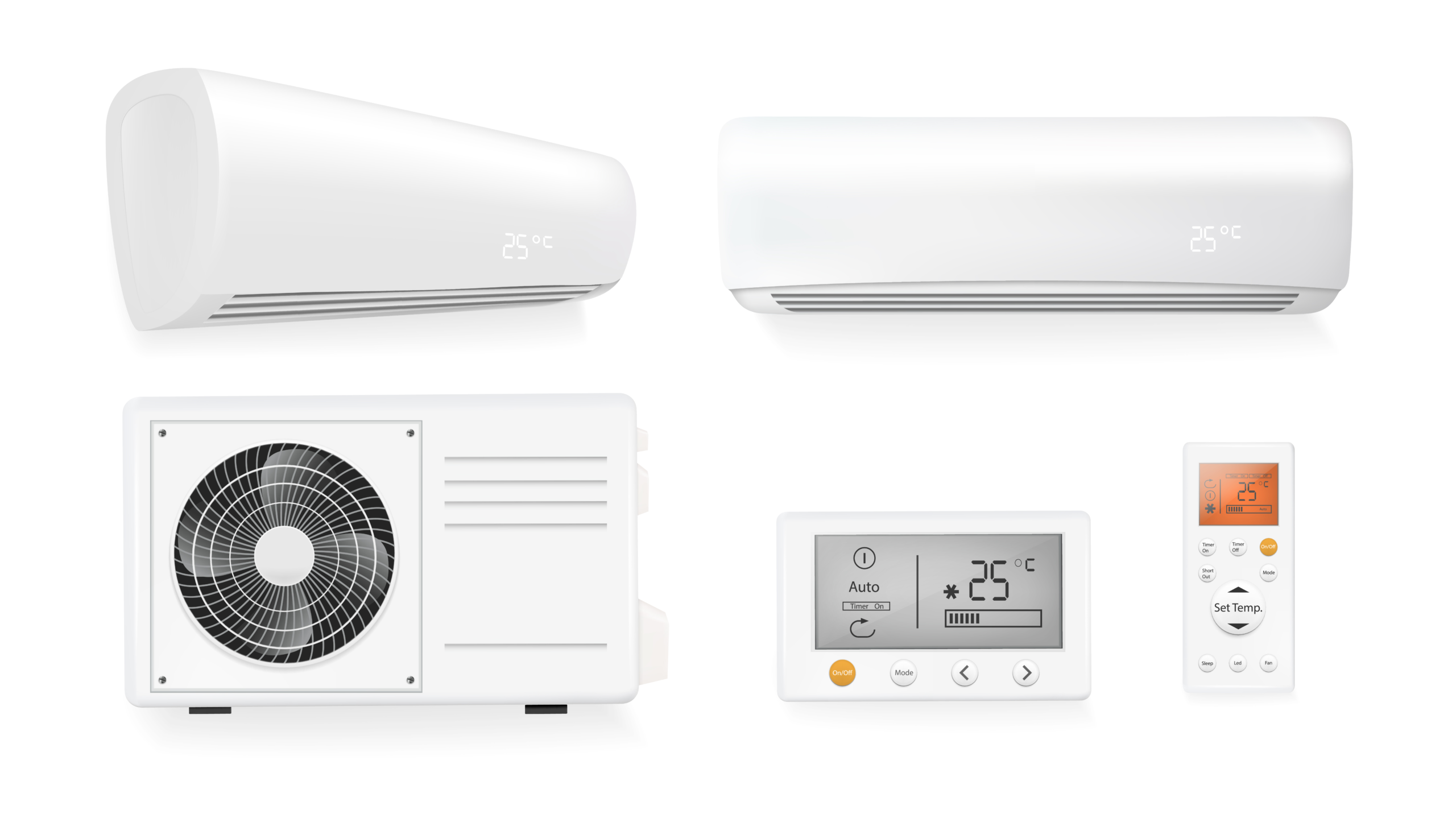
Ductless air source heat pumps – the mini split format – were designed precisely for this type of building. Each indoor air handler is compact, mounts on a wall or ceiling, and connects to the outdoor compressor unit through a small penetration in the exterior wall. No ductwork required. The system can be installed in an occupied building over a few days with minimal disruption.
For older NYC homes with poor insulation and high air leakage, pairing a heat pump installation with professional home insulation and air sealing work will significantly reduce the system size required and lower operating costs from day one. A smaller, better-performing system almost always makes more financial sense than a large system in a leaky building.
The Two-System Problem
The vast majority of New York City homes that do not have central air conditioning have a separate heating system and separate window or portable air conditioners. This means two systems to maintain, two sets of equipment to eventually replace, two separate failure points, and no way to cool rooms that do not have windows facing the right direction.
An air source heat pump eliminates that completely. One system, one set of maintenance costs, year-round comfort from a single installation. For homeowners currently spending money on oil or gas heat in winter and window AC units in summer, the total cost comparison shifts considerably in favour of a heat pump replacement.
The Energy Bill Reality in Numbers
NYSERDA’s project data from completed installations across New York State shows that households replacing oil or propane heating systems with cold-climate heat pumps save between $1,200 and $1,800 per year on energy costs. For homeowners using electric baseboard resistance heating – which operates at exactly 100 percent efficiency – a heat pump operating at 300 percent efficiency reduces electricity consumption for heating by approximately two-thirds.
Over a ten-year period, that is $12,000 to $18,000 in accumulated savings from an oil-to-heat-pump conversion, before factoring in maintenance cost differences between a modern heat pump and an ageing oil boiler.
Local Law 97: Why the Policy Landscape Is Now Pushing Everyone Toward Heat Pumps
What the Law Requires
NYC Local Law 97 is widely described as the most ambitious building emissions legislation in the United States. Passed in 2019 and now fully in force, it requires most buildings over 25,000 square feet to meet annual greenhouse gas emission caps. Penalties for non-compliance are set at $268 per metric ton of CO2 equivalent above the limit, and they are assessed every year.
The initial 2024-2029 compliance period is already active. A stricter set of limits takes effect in 2030, reducing allowable emissions by approximately 20 to 30 percent from current caps. The long-term goal, as stated by New York City, is to achieve net-zero emissions from the building sector by 2050.
Non-compliant large buildings are already receiving penalty notices. The Urban Green Council has described electrifying heating and domestic hot water as the most effective single pathway for covered buildings to reduce their carbon intensity quickly. Because the carbon emissions coefficient for electricity on the New York grid is set to drop by approximately 50 percent in the 2030 compliance period – as the grid becomes cleaner – switching from gas or oil to electric heat pumps now means the same equipment becomes progressively lower-carbon over time without any further changes.
The Beneficial Electrification Credit
For building owners with covered properties, the law includes a Beneficial Electrification Credit. This credit is awarded to buildings that replace fossil fuel heating, cooling, and domestic hot water systems with high-efficiency electric alternatives – including heat pumps – before 2030. Buildings that complete qualifying electrification work before 2026 receive higher credits under the current rules, making the urgency of acting now genuinely justified from a financial compliance standpoint.
What This Means for Smaller Homeowners
LL97 directly covers larger buildings, but its downstream effects are already visible across the entire NYC residential market. Contractors experienced in heat pump installation are in high demand. Rebate programmes are well-funded but will not remain at current levels indefinitely. And homeowners who wait for policy pressure to force their hand will face higher equipment costs, longer wait times for certified contractors, and a less favourable rebate landscape.
The homeowners benefiting most right now are the ones acting before the rush rather than during it.
Types of Air Source Heat Pumps Available for NYC Homes
Ductless Mini Split Systems (Most Common in NYC)
The ductless mini split is the standard choice for the city’s older housing stock. An outdoor compressor unit mounts on an exterior wall, rooftop, or rear yard. One or more indoor air handlers – slim, wall-mounted units – connect to it through a small penetration carrying refrigerant lines and a power cable.
Each indoor unit has its own thermostat and operates independently. A brownstone owner can heat the front parlour floor at 70 degrees while the rear garden apartment runs at 65 degrees. No zoning valves, no complex programming. Each zone does exactly what you ask.
For NYC homeowners considering a single-zone or multi-zone ductless installation, the mini split rebates in NYC guide covers the full stacking strategy for getting maximum financial incentives in 2026.
Ducted Air Source Heat Pumps
Homes built after the 1980s, or any property that has been renovated with forced-air ductwork, can install a ducted ASHP that integrates directly with the existing distribution system. The heat pump replaces the furnace and central AC as a single unit, using the existing vents for distribution.
The efficiency of a ducted system depends heavily on the condition of the ductwork itself. NYSERDA data from New York projects shows that the typical older home with a forced-air system loses 20 to 40 percent of conditioned air through duct leaks. Getting a duct leakage test and sealing those leaks before or alongside a heat pump installation is one of the most cost-effective things a homeowner can do. The air sealing service page on this site explains what that process involves and what to expect.
Multi-Zone Mini Split Systems
For larger homes, full brownstones, or two-family houses, multi-zone systems connect multiple indoor air handlers to a single outdoor compressor. This is important in New York City where exterior space is constrained. A single compact outdoor unit handling four or five indoor zones is far more practical than installing four or five separate single-zone systems with individual outdoor units competing for rooftop or rear yard space.
Multi-zone systems offer flexibility in how they grow over time. Many homeowners start with two zones covering the main living and sleeping areas, then add further zones in subsequent years as budget allows.
Heat Pump Water Heaters (The Often-Overlooked Companion Upgrade)
While not a space heating device, the heat pump water heater applies the same refrigerant-cycle efficiency to domestic hot water production. A standard electric water heater runs at 100 percent efficiency. A heat pump water heater operates at 200 to 300 percent efficiency, reducing water heating electricity consumption by 50 to 70 percent.
In New York, water heating typically accounts for 15 to 25 percent of a home’s total energy consumption. The combination of a space-heating ASHP and a heat pump water heater installation can eliminate virtually all of a home’s fossil fuel dependence in a single renovation phase, maximising both energy savings and available rebate totals.
Not Sure What a Mini Split Will Actually Cost You? Get a Free Assessment First
Mini split costs in NYC vary widely - and the wrong starting point can mean an oversized system, missed rebates, and higher bills than you need to pay. Our NYSERDA-approved energy advisors at Always On Energy offer a free in-home assessment to size your system correctly, confirm your eligibility for NYS Clean Heat rebates of up to $12,000, and help income-eligible households access up to $24,000 through EmPower+. Visit https://nyweatherizationprogram.com/ to schedule your no-cost assessment, or speak with an advisor directly - by phone or in person.
What Does an Air Source Heat Pump Actually Cost in NYC After Rebates?
Installed Costs Before Incentives
According to 2026 estimates from HeatPumpLocator.com, a whole-home air source heat pump system in New York costs between $6,000 and $15,000 installed. That range covers equipment and labour for a standard installation. Electrical panel upgrades, ductwork modifications, or complex multi-zone configurations add cost.
For a single-zone ductless mini split covering one or two primary rooms, expect installed costs of $3,000 to $5,000 before incentives.
The 2026 Rebate Landscape
New York offers some of the most generous heat pump incentive stacks in the country. The key programmes available to NYC homeowners in 2026 are:
NYS Clean Heat Programme (NYSERDA): According to HomeEnergyBasics.com’s 2026 rebate guide, the NYS Clean Heat programme offers $6,000 to $12,000 for air source heat pump installations, depending on utility territory, whether the property qualifies as a Disadvantaged Community (DAC), and whether the home meets the new Weatherized Tier standards introduced on March 1, 2026.
EmPower+ Programme: Income-eligible households at or below 80 percent of Area Median Income can access the EmPower+ pathway instead of standard Clean Heat rebates. This provides up to $24,000 for qualifying installations – a dramatically higher ceiling than the market-rate programme. The NYSERDA EmPower+ income guidelines explained article on this site covers exactly who qualifies and how to apply.
NYSEG Clean Heat Rebate: For homeowners in NYSEG service territory, up to $10,000 in rebates is available for air source heat pump installations, handled directly through the contractor.
Con Edison and Other Utility Rebates: NYC homeowners served by Con Edison can stack utility rebates on top of state programme incentives for qualifying installations. Con Edison rebates can cover 50 percent or more of installation costs for income-qualifying households.
Federal Note for 2026: The IRA Section 25C federal tax credit expired on December 31, 2025 and is not available for systems installed in 2026. All current incentive planning for NYC homeowners should be built around state and utility programmes, not federal tax credits.
What the Real Net Cost Looks Like
For a market-rate NYC homeowner installing a mid-range whole-home ASHP system:
- Installed cost before incentives: $10,000 to $12,000
- NYS Clean Heat rebate: $6,000 to $8,000
- Net out-of-pocket cost: $2,000 to $6,000
- Annual energy savings (replacing oil): $1,200 to $1,800
At $4,000 net cost and $1,500 in annual savings, the simple payback period is approximately 2.5 to 3 years. At that point the system produces pure savings for its remaining 15 to 20 year service life.
For income-qualifying households using the EmPower+ pathway, the net cost can approach zero.
What You Should Do Before Installing an Air Source Heat Pump
Start with a Home Energy Audit
The most common and costly mistake homeowners make is sizing and installing a heat pump in a building envelope that has not been assessed. An undersized system in a leaky, poorly insulated home will struggle to maintain comfort. An oversized system in the same home will cycle on and off inefficiently and wear out sooner than it should.
A free NYSERDA home energy audit identifies exactly where your home is losing heat, what insulation levels you currently have, and how much air leakage is costing you. This data drives the Manual J load calculation that contractors use to size your heat pump correctly. It also unlocks access to additional rebates for insulation and air sealing that can be combined with your heat pump installation for a single coordinated upgrade.
NYSERDA-certified energy auditors use diagnostic equipment – blower door tests, infrared thermography, duct leakage measurements – to build a precise picture of your building’s performance. The audit report then gives you a prioritised improvement plan with specific cost, savings, and payback data for each measure.
Address the Building Envelope First
If your audit reveals significant air leakage or inadequate insulation – which is almost certain in any NYC home built before 1980 – addressing those issues before or alongside your heat pump installation will:
- Reduce the size of heat pump you need to buy, lowering installed cost
- Improve the system’s operating efficiency on cold days
- Increase comfort by eliminating cold drafts and temperature variation between rooms
- Unlock additional rebates for the insulation and air sealing work itself
The NYC home insulation costs breakdown for 2026 covers what insulation improvements typically cost in the city and what rebates apply. For attic spaces specifically, the attic insulation cost guide for NYC provides detailed per-square-foot data for 2026 conditions.
Verify Your Electrical Panel Capacity
Air source heat pumps run on electricity. Most single-zone and smaller multi-zone systems operate on a standard 240V circuit and do not require a panel upgrade. However, whole-home multi-zone systems or heat pump water heater combinations can exceed the available capacity in older NYC buildings that still have 100-amp service.
A licensed electrician can assess your panel during the energy audit phase. If an upgrade is required, factor that cost into your total project budget and ask your contractor whether it qualifies for additional utility rebates.
Choose a Certified Contractor
For all NYS Clean Heat and EmPower+ rebates, the installation must be completed by a participating, certified contractor. Using a non-participating contractor disqualifies you from state and utility incentives entirely.
NYSERDA maintains a searchable database of participating installers. When comparing quotes, ask each contractor to confirm their current programme participation status and ask them to include the rebate application in their scope of work. Reputable contractors handle the paperwork on the homeowner’s behalf.
Common Questions NYC Homeowners Ask About Heat Pumps
Will a heat pump keep my home warm enough in January?
Yes. Modern cold-climate ASHPs are rated for effective operation at -13 degrees Fahrenheit. New York City’s average January low is approximately 26 degrees Fahrenheit. A properly sized and installed cold-climate unit will maintain your desired indoor temperature through the entire NYC heating season without supplemental heat.
My building has steam radiators. Can I still install a heat pump?
Yes, but the approach is usually to install a ductless mini split system for heating and cooling that supplements or fully replaces the steam system rather than connecting to the existing radiator loop. Many NYC homeowners use this approach to decommission their oil boiler entirely while keeping the radiators in place as backup or aesthetic features.
Do heat pumps work in apartments?
Ductless mini splits can be installed in individual apartments, particularly in ground-floor units, garden apartments, or any unit with access to an exterior wall for the refrigerant line penetration. Building-wide conversions are more complex and subject to co-op or condo board approval. NYC Accelerator offers free technical assistance for multifamily buildings navigating LL97 compliance and electrification planning.
Does the outdoor unit make a lot of noise?
Modern ASHP outdoor units operate at 50 to 60 decibels at low speed – roughly equivalent to a normal conversation or a quiet dishwasher. High-speed operation during extreme temperatures is louder, but outside the building it is rarely a concern for neighbours. Check with your local building department about any noise ordinances for mechanical equipment before installing.
What happens during a power outage?
An air source heat pump requires electricity to operate. During an extended grid outage in winter, a heat pump without a backup generator will not provide heat. For homeowners in flood-prone or outage-prone areas of the city, a backup heat source – even a small electric resistance unit or a gas fireplace – provides peace of mind. In practice, extended winter outages in NYC are rare.
Not Sure What a Mini Split Will Actually Cost You? Get a Free Assessment First
Mini split costs in NYC vary widely - and the wrong starting point can mean an oversized system, missed rebates, and higher bills than you need to pay. Our NYSERDA-approved energy advisors at Always On Energy offer a free in-home assessment to size your system correctly, confirm your eligibility for NYS Clean Heat rebates of up to $12,000, and help income-eligible households access up to $24,000 through EmPower+. Visit https://nyweatherizationprogram.com/ to schedule your no-cost assessment, or speak with an advisor directly - by phone or in person.
The Bottom Line for New York City Homeowners
Air source heat pumps are not a future technology. They are installed, operating, and saving money in homes across New York City right now. The combination of mature cold-climate performance, historically high rebate levels, rising fossil fuel costs, and an accelerating policy environment pushing buildings toward electrification makes 2026 one of the best years in a generation to make this upgrade.
The path forward is straightforward:
Start with a free NYSERDA home energy audit to understand your building’s current performance and identify the right combination of improvements. Use that data to select a correctly-sized system. Engage a NYSERDA-participating contractor who will handle your rebate application. And consider pairing your space heating upgrade with a heat pump water heater installation to maximise both savings and total incentive value.
The technology is ready. The money is available. The policy direction is clear. The only variable is when you decide to act.